

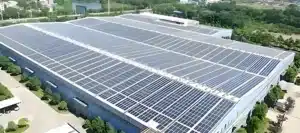
In a world where energy efficiency and sustainability have become key pillars for businesses and communities, commercial solar PV is emerging as a revolutionary alternative. At Thomson, we understand that businesses are looking not only to reduce operating costs, but also to actively contribute to environmental protection. That's why we offer customized solutions that transform underutilized spaces, such as rooftops and industrial areas, into clean, cost-effective sources of energy.
Why choose commercial solar energy?
Commercial solar is not just a trend; it is a strategic investment. According to recent studies, companies that adopt photovoltaic systems can reduce their electricity bills by as much as 70%, depending on scale and location. In addition, by generating their own electricity, companies protect themselves against the volatility of traditional energy prices and enhance their reputation as environmentally responsible entities.
In countries such as Spain, Mexico and Colombia, where sunshine hours are abundant, solar energy is positioned as a particularly viable option. For example, a logistics warehouse in Madrid with 1,000 square meters of solar panels can produce enough energy to cover 80% of its annual consumption, significantly reducing its carbon footprint.
The Thomson proposal: Technology and expertise
At Thomson, we combine technical innovation with a practical approach. Our process begins with a comprehensive site assessment, where we analyze factors such as roof orientation, shading cast by nearby structures and the client's historical energy consumption. This analysis allows us to design a photovoltaic system tailored to each company's specific needs.
- 1. High efficiency components
We use state-of-the-art solar panels with conversion rates higher than 22%, ensuring optimal performance even in low light conditions. Our inverters, designed to withstand voltage fluctuations, ensure stable power delivery to the customer's grid.
- Integration with existing systems
For companies that already have an energy infrastructure in place, we offer hybrid solutions that combine solar energy with traditional sources. This not only maximizes autonomy, but also provides backup during power outages, which is critical for industries such as manufacturing and food.
- Predictive maintenance
Our remote monitoring service can detect anomalies in real time, from dust accumulation on panels to connector failures. Local technical teams perform preventive maintenance every 6 months, ensuring that the system operates at 100% capacity for its entire lifetime (25-30 years).
Success stories: Companies that have already made the leap
Retail chain store in Quito, Ecuador
After installing 500 solar panels on its roof, this company reduced its dependence on the grid by 65%. Surplus energy is sold to the local grid, generating additional revenue that paid back the investment in less than 5 years.
Textile factory in Bogota, Colombia
A hybrid system with Thomson storage batteries enabled the plant to maintain continuous operations during frequent power outages in the region. In addition, the project earned them environmental certifications that opened doors in international markets.
Environmental Impact: Beyond Emissions Reduction
Commercial solar power not only reduces CO₂ emissions. By decreasing dependence on fossil fuels, companies contribute to:
Improve air quality in urban and industrial areas.
Preserve water resources, since solar generation requires less water than traditional methods such as thermoelectric plants.
Protect ecosystems by reducing the need to exploit land for coal or gas extraction.
At Thomson, we measure the success of our projects not only in financial terms, but also through metrics such as tons of CO₂ avoided and communities benefiting from less pollution.
Financing and tax benefits
Many governments offer incentives for the adoption of solar energy, such as:
Tax credits covering up to 30% of the installation cost.
Preferential rates for the sale of surplus energy, acceleration of equipment depreciation, reducing the tax burden.
Our financial advisory team helps clients navigate these options, ensuring that each project is both environmentally and economically viable.

 English
  Español
  简体中文
简体中文