
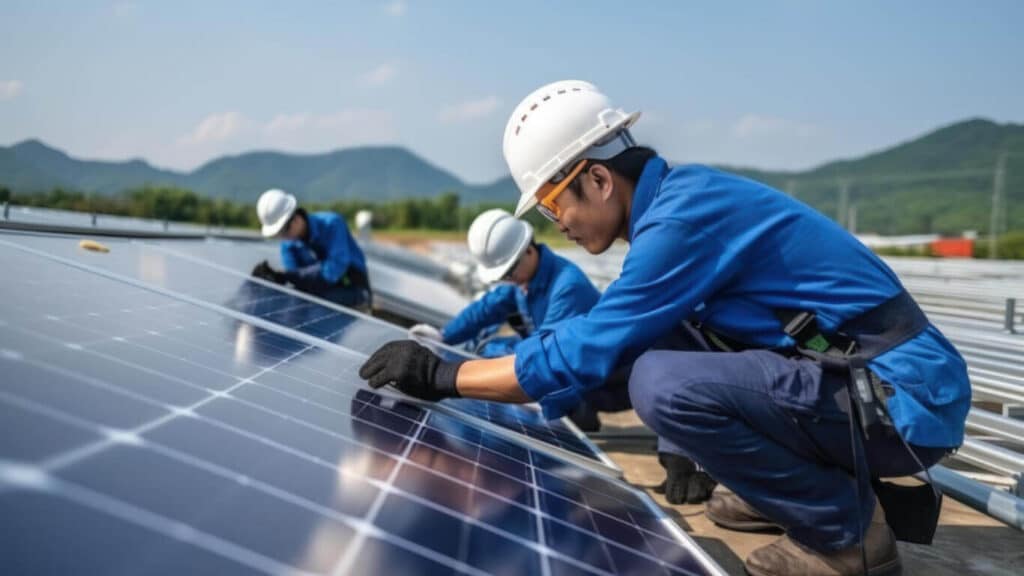
In a world where the demand for clean and resilient energy is growing exponentially, photovoltaic hybrid systems are emerging as an integral solution.Thomsen Hybrid PV Systemcombines advanced solar technology, smart storage and innovative energy management to provide a stable and sustainable supply, even in challenging environments
This article explores how our technology is transforming the energy sector, ensuring efficiency, cost reduction and alignment with the Sustainable Development Goals (SDGs).
1. Key Components of the Thomsen Hybrid System
1.1 High Efficiency Photovoltaic Panels
Our panels use monocrystalline silicon cells with an efficiency of 22-24%, optimized for light harvesting in low irradiance conditions. They incorporate anti-reflective coatings and bi-directional solar tracking structures, increasing energy production by up to 30% compared to conventional systems.
1.2 Storage with Modular Lithium-Ion Battery Packs
The system integrates lithium-ion battery banks with passive thermal management, capable of operating in ranges from -20°C to 50°C. With a lifetime of 6,000 cycles and scalable capacity from 10 kWh to 1 MWh, they guarantee autonomy during grid outages or demand peaks.
1.3 Smart Hybrid Inverters
Equipped with automatic phase synchronization technology and microgrid compatibility, our inverters enable seamless transition between solar sources, storage and grid. They include real-time monitoring via IoT to optimize consumption.
1.4 Energy Management Systems (EMS)** 1.5 Energy Management Systems (EMS)** 1.5 Energy Management Systems (EMS)
Based on predictive AI algorithms, our EMS analyzes consumption patterns, weather forecasts and electricity tariffs to prioritize self-consumption or grid feed-in, maximizing economic savings.
2. Competitive Advantages of Thomsen Hybrid PV System
2.1 Resilience to Extreme Conditions
Inspired by standards such asFM Globalfor wind and fire resistance
our panels withstand load tests of 5,400 Pa and temperatures from -40°C to 85°C, ideal for areas with hurricanes or heavy snowfall.
2.2 Integral Sustainability
- Reduced Carbon FootprintWe use recycled steel in structures and manufacturing processes with 100% renewable energy.
- Component RecyclingWe collaborate with circular economy programs to recover 95% of materials in panels at the end of their useful life.
2.3 Versatile Applications
- IndustryOptimization of consumption in manufacturing plants with 24/7 demands.
- CommercialIntelligent buildings with architectural integration (e.g., BIPV façades)
- Remoteoff-grid solutions for telecommunications or mining, combinable with environmentally friendly diesel generators
3. Success Stories and Tangible Benefits
3.1 Andalusia Logistics Center Project
2.5 MW facility with 500 kWh storage:
- Annual Savings320,000 in energy costs.
- Emissions Reductionemissions: 1,200 tons of CO₂/year.
- ROI4.2 years thanks to government incentives
3.2 Resilient Community in the Canaries
Hybrid microgrid for 300 homes:
- Autonomy72 hours during tropical storms.
- Citizen ParticipationBlockchain platform for the exchange of surpluses
4. Future Innovation: Towards Energy Self-Sufficiency
4.1 Integration with Green Hydrogen
In collaboration with leaders such asThyssenkrupp
4.2 Advanced Digitization
- Digital CufflinksPerformance simulation under extreme weather scenarios.
- Blockchain: Smart contracts for P2P energy markets
Conclusion: The Future is Hybrid
Thomsen Hybrid PV System not only responds to today's energy needs, but anticipates tomorrow's challenges. By combining technical innovation, environmental sustainability and operational flexibility, we position our customers as leaders in the transition to a decarbonized world.

 English
  Español
  简体中文
简体中文